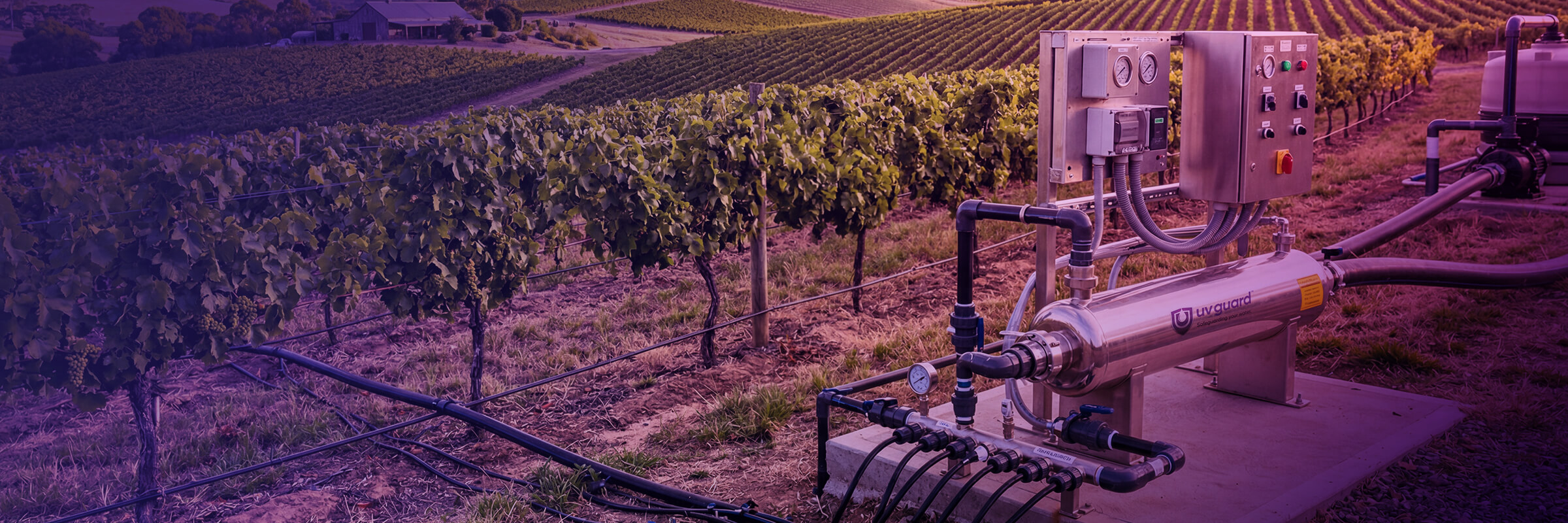
UV Water Disinfection for Agriculture and Irrigation: What Growers Need to Know
Categories: Agriculture & Irrigation, Armour, Armour X, Blog, Commercial, HWC-Series - Commercial, MPX-Series, S-Series, WF-Series, X-Series
Poor irrigation water quality can quietly reduce crop performance long before visible symptoms appear. Waterborne pathogens such as Pythium, Fusarium and Phytophthora can spread through recirculating systems, dams, bores and irrigation lines, increasing root disease, plant stress, crop loss and mortality. In high-value horticulture, hydroponics and nurseries, contaminated water can quickly become a serious problem. Furthermore, when that water reaches edible produce, the consequences range from crop rejection to recall events that damage brands and livelihoods.
UV water disinfection for agriculture offers a reliable, chemical-free solution that fits into existing irrigation infrastructure without altering water chemistry, taste or nutrient profile.
The Primary Threat: Waterborne Moulds and Fungi
In recirculating hydroponics, nursery production and open field irrigation drawing from dams or rivers, the most commercially significant water quality risk is fungal and oomycete pathogens. Pythium species cause root rot across a vast range of crops. Fusarium causes crown rot and vascular wilt. Phytophthora destroys root systems in strawberries, avocados, capsicums and many other high-value crops.
These organisms are waterborne and spread efficiently through shared irrigation water. A single infected section of a recirculating system or a contaminated dam can expose an entire production facility. UV treatment at 254nm inactivates these organisms within the water column before they reach the root zone.
The economic case for UV in high-value horticulture is straightforward: the cost of a properly sized UV system is a fraction of the value of a single compromised crop cycle.
Secondary Concern: Human Pathogens on Edible Produce
While mould and fungal control is the primary driver for most agricultural UV installations, human pathogen risk in irrigation water is a real and growing compliance issue. E. coli O157:H7, Salmonella and Listeria monocytogenes have all been implicated in produce contamination events linked to irrigation water. UV Guard has supplied disinfection systems to operations addressing exactly this risk, including melons grown under overhead irrigation where water contact with edible surfaces is direct.
Regulators in Australia, the US, the EU and across Asia-Pacific have tightened microbial standards for water used on fresh produce. The FSANZ Food Standards Code, the US Food Safety Modernization Act (FSMA) and GlobalG.A.P. certification all include requirements around irrigation water microbiology.
Growers drawing from dams, rivers, recycled municipal supplies or shared irrigation channels face the highest exposure. UV disinfection addresses both pathogen categories in a single system.
How UV Disinfection Works in Irrigation Systems
A UV disinfection system passes water through a chamber where germicidal ultraviolet light at 254nm disrupts the DNA of bacteria, viruses, fungi and oomycetes. Treated organisms cannot reproduce. The water moves on to drip lines, sprinklers or flood systems without any chemical residue.
Unlike chlorine, UV treatment does not affect water pH, create disinfection by-products or leave residues that interfere with soil biology or protected cropping environments. This makes it particularly well-suited to hydroponic systems, covered horticulture and organic certified operations.
UV Guard commercial systems are sized to match flow rates from small plot irrigation through to large-scale broadacre and orchard applications.
Real-World Applications in Agricultural Settings
Common scenarios where UV disinfection delivers measurable results:
- Hydroponic and greenhouse growers treating recirculating nutrient solutions to prevent Pythium and Fusarium spread between growing cycles.
- Fruit and vegetable producers using recycled or dam water for overhead irrigation on leafy greens, where spray drift creates direct contact with edible tissue.
- Orchards and vineyards treating bore water supplies that carry bacteria or coliform contamination from nearby stock management areas.
- Nurseries protecting propagation water quality to reduce damping-off losses caused by Pythium and Rhizoctonia.
- Melon and berry growers managing food safety risk on crops with surface contact to irrigation water.
Sizing and System Selection
The two critical parameters for any agricultural UV system are flow rate and UV transmittance (UVT) of the source water. Lower UVT means the water absorbs more UV light before it reaches the target organism, requiring a higher-powered system or pre-treatment.
Pre-filtration is almost always required ahead of a UV system in agricultural applications. Turbidity, iron, organic matter and suspended solids all reduce UVT. A sediment filter and, in some cases, an iron removal stage upstream of the UV unit is standard practice.
UV Guard provides full technical support for system selection, including UVT testing recommendations and flow rate calculations.
Maintenance Considerations
UV systems in agricultural settings require scheduled maintenance to stay effective:
- Annual UV lamp replacement, or at 9,000 operating hours.
- Regular quartz sleeve cleaning to remove mineral scale and biofilm that reduce UV output.
- Periodic UVT testing of source water, particularly after seasonal rainfall or changes in supply.
UV Guard stocks UV lamps and quartz sleeves for all major system brands.
Frequently Asked Questions
Talk to Us About UV Water Treatment Systems
Ready to protect your irrigation water supply? Contact the UV Guard team to discuss your application, or explore our full range of UV water treatment systems.

UV Water Treatment in Industrial and Manufacturing Facilities: Protecting Processes and Reducing Risk
UV water treatment in industrial and manufacturing applications protects process water quality, reduces chemical handling, and meets environmental discharge standards. Explore key applications and system options.
-
UV for Chlorine and Chloramine Destruction: A Practical Guide for Water Processors
UV photolysis combined with activated carbon is the most effective approach for chlorine and chloramine removal in process water, semiconductor manufacturing and renal dialysis. Learn how UV systems are specified and applied.
Get in touch
Contact our team for expert guidance on selecting the right UV water treatment system, sourcing compatible spare parts, or confirming the correct components for your existing setup. We can also assist with servicing requirements to help maintain performance and long-term reliability.
Newsletter
Stay up-to-date with our very latest news, technology, offers and events.