UV for Total Organic Carbon Reduction in Ultrapure Water Systems
Categories: Armour, Armour X, Blog, Commercial, LED-Series - Commercial, MPX-Series, P-Series, S-Series, T-Series, Total Organic Carbon Reduction, X-Series
Total organic carbon is a key quality parameter in ultrapure water used in semiconductor fabrication, pharmaceutical manufacturing, laboratory analysis and electronics cleaning. Even trace organic contamination at parts per billion concentrations interferes with critical processes, compromises product yields and fails compliance testing.
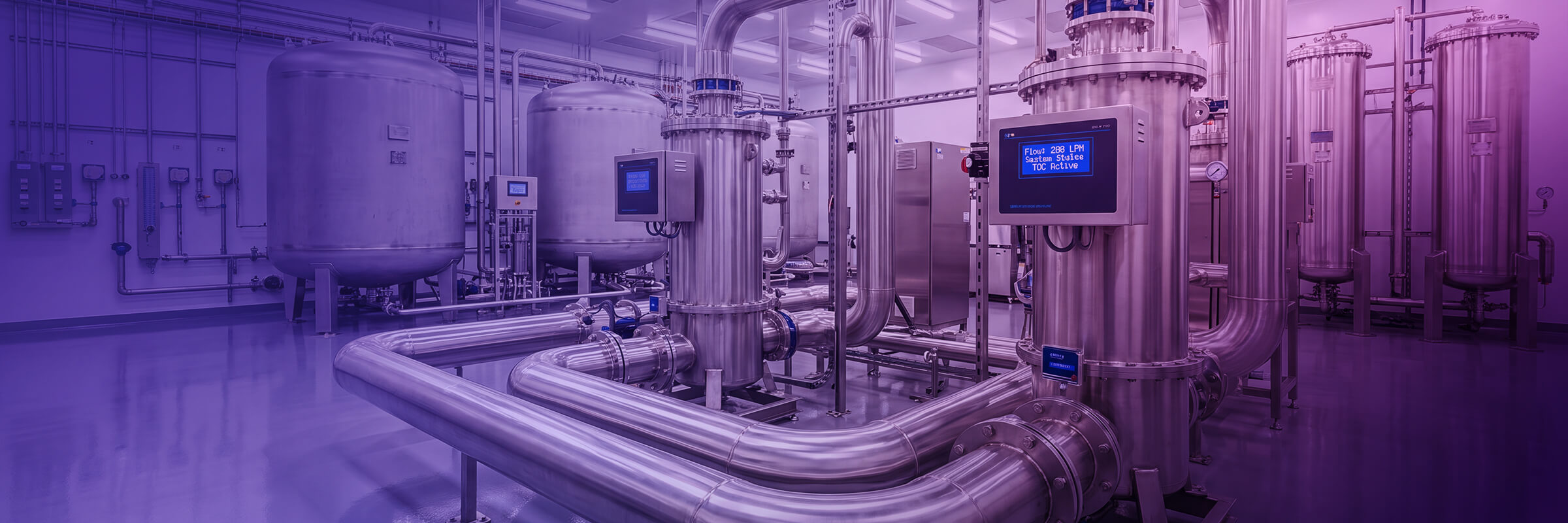
UV photolysis at 185nm is the primary method for organic carbon reduction in ultrapure water production systems. It is compact, chemical-free and continuously effective as part of a recirculating water loop.
Why TOC Matters in Ultrapure Water
In semiconductor water fabrication, organic compounds on water surfaces cause adhesion failures and contaminate gate oxide layers. In pharmaceutical manufacturing, USP and EP purified water standards set TOC limits at 500 ppb (0.5 mg/L). Laboratory water for analytical chemistry and cell culture requires TOC below 50 ppb for reagent-grade applications.
Sources of TOC in water systems include dissolved natural organic matter from source water, leaching from pipe materials and fittings, and degradation of ion exchange resins. Even in a well-designed system, TOC can accumulate in a recirculating loop without active TOC reduction.
How 185nm UV Reduces TOC
Conventional UV disinfection uses light at 254nm. TOC reduction requires UV at 185nm, a shorter wavelength that is more energetic and is absorbed by water molecules and organic compounds.
At 185nm, two simultaneous reactions occur. First, UV light photolyses water molecules to generate hydroxyl radicals. Second, organic compounds absorb UV energy directly and undergo oxidative degradation. The hydroxyl radicals are among the most powerful oxidants known in aqueous chemistry and attack organic compounds rapidly and non-selectively.
The products of this oxidation are carbon dioxide and water, which are removed from the system by degassing and ion exchange stages downstream. The result is a continuous reduction of organic carbon in the recirculating water loop.
Placement in Ultrapure Water Production
UV TOC reduction units are positioned in the recirculating distribution loop of an ultrapure water system, typically after polishing ion exchange or mixed-bed deionisation stages. The low-TOC water from the distribution loop is continuously circulated through the UV unit, maintaining organic carbon at target levels throughout the day.
185nm UV lamps also generate trace ozone from dissolved oxygen in the water. Downstream ozone destruction is sometimes required depending on the application. UV Guard can advise on complete system configurations.
Frequently Asked Questions
Talk to Us About UV Water Treatment Solutions
Contact UV Guard to discuss UV TOC reduction systems for ultrapure water production.

UV Disinfection for Wastewater Treatment: Meeting Discharge Standards Without Chemical Residues
UV wastewater disinfection is the preferred method for municipal and industrial effluent treatment. It eliminates pathogens before discharge without the chlorine residue problems that affect receiving waterways.
-
UV Disinfection for Warm Water Systems and Legionella Control: Protecting Vulnerable People
UV disinfection is an effective supplementary strategy for Legionella control in building water systems, reducing bacterial populations to protect immunocompromised patients, aged care residents and high-risk occupants.


Get in touch
Contact our team for expert guidance on selecting the right UV water treatment system, sourcing compatible spare parts, or confirming the correct components for your existing setup. We can also assist with servicing requirements to help maintain performance and long-term reliability.
Newsletter
Stay up-to-date with our very latest news, technology, offers and events.